
Ayurvedic Products vs. Modern Wellness Products: What’s the Difference?
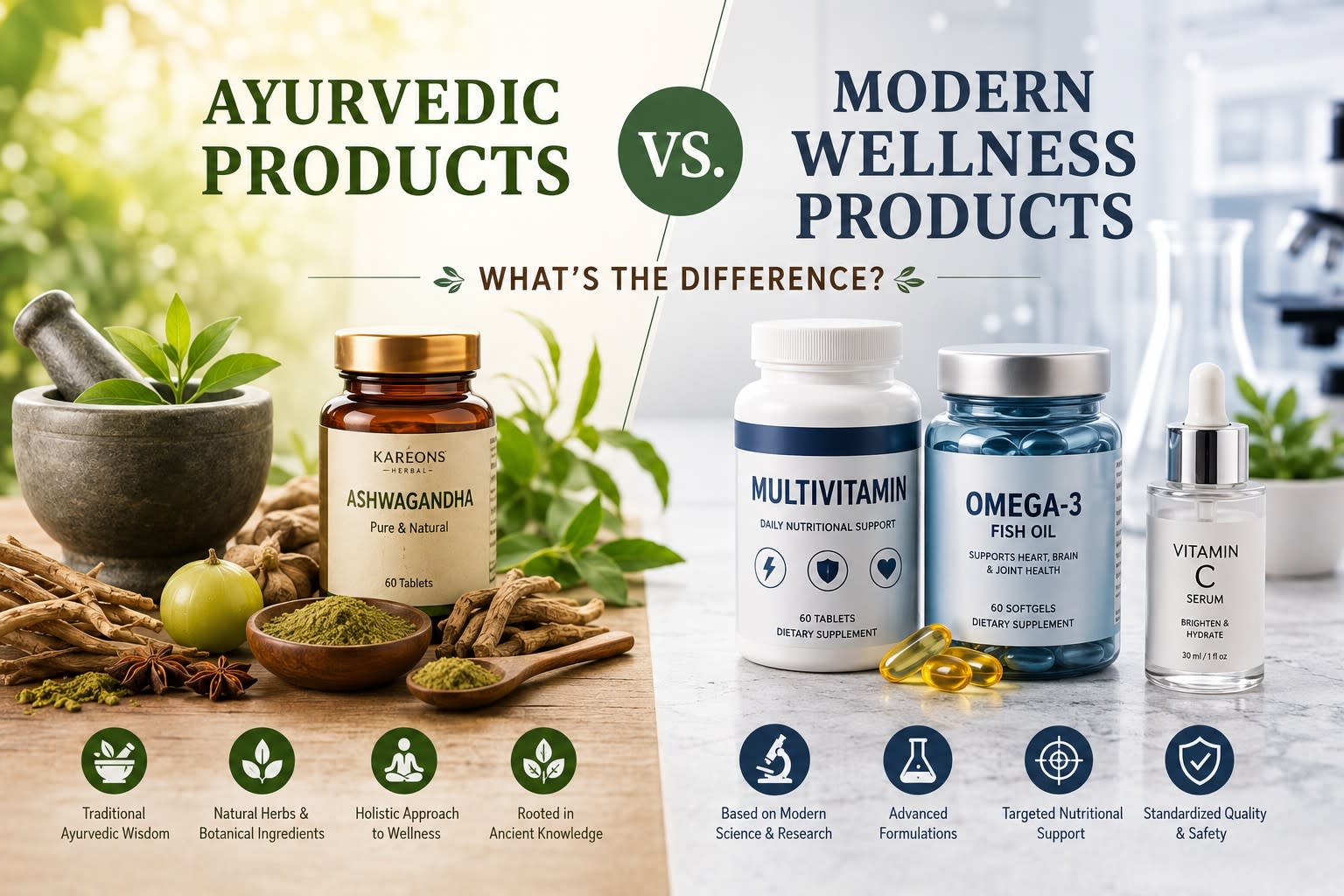
Today, people have more choices than ever when it comes to personal wellness. From traditional herbal preparations to modern supplements and wellness products, the market offers a wide range of options designed to support everyday health and lifestyle goals.
Two categories that are often compared are Ayurvedic products and modern wellness products. While both can be part of a balanced lifestyle, they come from different traditions and may approach wellness in different ways.
Understanding these differences can help you make more informed decisions when choosing products for your daily routine.
What Are Ayurvedic Products?
Ayurveda is a traditional system of medicine that originated in India and has been practiced for thousands of years. Ayurvedic products are generally inspired by Ayurvedic principles and may contain herbs, plant-based ingredients, oils, spices, minerals, or other traditionally used ingredients.
Commonly known Ayurvedic ingredients include Ashwagandha, Amla, Neem, Turmeric, Brahmi, Shatavari, Giloy and Triphala.
Ayurveda traditionally takes a holistic approach to wellness. Rather than focusing only on one aspect of health, it considers factors such as lifestyle, diet, daily routines, and individual constitution.
However, the quality and formulation of Ayurvedic products can vary considerably. Consumers should therefore check the ingredients, manufacturer information, recommended usage, and applicable quality standards before purchasing.
What Are Modern Wellness Products?
Modern wellness products are a broad category that includes products developed for contemporary health and lifestyle needs. Depending on the product, they may include nutritional supplements, fortified foods, functional beverages, personal-care products, fitness-related products, or other wellness-focused formulations.
Many modern wellness products are developed using contemporary nutritional science, food technology, formulation techniques, and laboratory testing. Their ingredients may include vitamins, minerals, botanical extracts, amino acids, probiotics, or other nutritional compounds.
The term “modern wellness product” does not describe one specific scientific or regulatory category. Therefore, the ingredients, evidence, quality standards, and intended uses can differ significantly from one product to another.
Ayurvedic Products vs. Modern Wellness Products
The biggest difference is often the approach to wellness rather than simply whether a product contains herbs or laboratory-developed ingredients.
| Aspect | Ayurvedic Products | Modern Wellness Products |
|---|---|---|
| Foundation | Inspired by traditional Ayurvedic principles | Often based on modern nutrition, science, technology, or contemporary wellness practices |
| Ingredients | Frequently uses herbs, botanicals, oils, spices, and traditionally used ingredients | May contain vitamins, minerals, botanical extracts, probiotics, amino acids, and other ingredients |
| Approach | Generally holistic and connected with traditional wellness practices | Often focused on specific nutritional or lifestyle objectives |
| Formulations | May follow traditional Ayurvedic formulations or principles | Often developed using contemporary formulation and manufacturing techniques |
| Usage | Can be incorporated into traditional wellness routines | Can be incorporated into modern health and lifestyle routines |
1. Difference in Philosophy
One of the most important differences is the philosophy behind each category.
Ayurveda traditionally views wellness from a holistic perspective. It emphasizes balance between different aspects of life, including diet, lifestyle, daily routines, and individual constitution.
Modern wellness products, on the other hand, often focus on specific nutritional or lifestyle needs. For example, a product may be formulated to provide a particular vitamin, mineral, probiotic, or botanical ingredient.
This does not necessarily mean that one approach is better than the other. They simply come from different wellness traditions and formulation philosophies.
2. Difference in Ingredients
Ayurvedic products commonly feature traditionally used herbs and plant-based ingredients. For example, Amla has a long history of use in Ayurveda, while Ashwagandha and Brahmi are also traditionally used herbs.
Modern wellness products can contain a much broader range of ingredients, including isolated nutrients, vitamins, minerals, standardized botanical extracts, probiotics, and other compounds.
It is important to remember that the presence of a “natural” or “herbal” ingredient does not automatically mean that a product is suitable for everyone. Similarly, a modern formulation is not automatically better simply because it uses scientifically developed ingredients.
3. Traditional Knowledge vs. Modern Research
Ayurvedic products are often connected with traditional knowledge and practices that have been passed down through generations.
Modern wellness products may rely more heavily on contemporary research, nutritional science, laboratory analysis, and standardized manufacturing processes.
Some Ayurvedic ingredients have also been studied in modern scientific research. However, the level and quality of evidence can vary depending on the specific ingredient, preparation, dosage, and intended use.
Therefore, it is useful to distinguish between traditional use and clinically established health effects. Traditional use should not automatically be interpreted as proof that a product can prevent, diagnose, treat, or cure a medical condition.
4. Natural Does Not Always Mean Risk-Free
One common misconception is that herbal or Ayurvedic products are always completely risk-free because they come from natural ingredients.
Natural ingredients can have biological effects and may not be appropriate for everyone. Some herbs can interact with medicines or may require additional caution for certain individuals.
Before using an Ayurvedic or herbal product, particularly if you take medication, are pregnant or breastfeeding, have an existing medical condition, or are considering a product for a child, it is sensible to consult a qualified healthcare professional.
5. How to Choose Between Ayurvedic and Modern Wellness Products
Instead of asking which category is universally better, consider what you are actually looking for.
Check the Ingredients
Read the complete ingredient list carefully. Look for clearly identified ingredients and avoid purchasing products when important information is missing.
Understand the Intended Use
Look at what the product is designed for and follow the manufacturer's recommended directions. Be cautious of products making exaggerated promises or guaranteed results.
Check the Manufacturer
Choose products from manufacturers that provide clear information about their ingredients, manufacturing practices, product details, and quality standards.
Look at the Label
A good product label should provide useful information such as ingredients, quantity, recommended usage, warnings where applicable, manufacturer details, and batch or product information required by applicable regulations.
Consider Your Individual Needs
Wellness is personal. A product that works well for one person may not be appropriate for another. Consider your dietary habits, lifestyle, age, existing health conditions, and medications before adding a new supplement or herbal product to your routine.
Can Ayurvedic and Modern Wellness Products Be Used Together?
There is no universal rule that says a person must choose only Ayurvedic or only modern wellness products. However, combining multiple supplements or herbal products without understanding their ingredients can increase the possibility of excessive intake or unwanted interactions.
If you are already taking supplements, prescription medicines, or multiple herbal products, consider discussing your complete routine with a qualified healthcare professional before adding something new.
Why Product Quality Matters
Whether you choose an Ayurvedic product or a modern wellness product, quality should be one of your first considerations.
Two products containing the same named ingredient may not necessarily be identical. Differences can exist in ingredient quality, sourcing, processing, formulation, concentration, packaging, storage, and manufacturing practices.
That is why choosing a transparent and responsible brand is an important part of making an informed purchase.
Ayurveda and Modern Wellness: Finding a Balanced Approach
Ayurvedic products and modern wellness products do not necessarily have to be viewed as competitors.
Ayurveda provides a traditional perspective on holistic wellness, while modern wellness products often incorporate contemporary nutritional knowledge, technology, and formulation methods. Understanding both approaches can help consumers make thoughtful choices rather than relying on marketing claims alone.
The most important part of any wellness routine is consistency, informed decision-making, a balanced diet, regular physical activity, adequate sleep, and appropriate professional healthcare when needed.
Final Thoughts
The difference between Ayurvedic products and modern wellness products largely comes down to their origins, philosophies, ingredients, formulation approaches, and evidence base.
Ayurvedic products are rooted in India's traditional wellness system and often use herbs and other traditionally valued ingredients. Modern wellness products represent a broad category that may use contemporary nutritional science, standardized ingredients, and modern formulation technologies.
When choosing a product, focus on more than the label. Check the ingredients, understand the intended use, choose a trustworthy manufacturer, follow usage instructions, and consider your individual circumstances.
KareOns Herbal believes that informed consumers make better wellness choices. By understanding both traditional and modern approaches, you can build a wellness routine that is thoughtful, practical, and suited to your lifestyle.
Disclaimer: This article is provided for general educational and informational purposes only. It is not intended to diagnose, treat, cure, or prevent any disease or medical condition. Ayurvedic and herbal products should be used according to their product directions and applicable guidance. If you have a medical condition, take medication, or have specific health concerns, consult a qualified healthcare professional before using a new product.